Five centuries of one kitchen · Gaziantep
For five hundred years the Göğüş family has laid Gaziantep's wedding tables. Today the same kitchen stands across from the Panorama Museum — run entirely by women, cooking only what the season allows.
Tables of 3–10. Share dishes that are cooked only a few weeks a year.
Book the table 02Closed corners for one-to-ones; the upper floor for teams and client dinners.
See the options 03Directly across from the Panorama Museum. A table after the museum — or a workshop in the kitchen.
See the workshopChapter I · Heritage
In the city's records the Göğüş name appears alongside its wedding tables. For five centuries the family kept no restaurant: it set its cauldrons in the courtyard of the house that invited it, cooked an entire neighbourhood's wedding, and withdrew the next morning. The craft passed not from father to son but from whoever stood at the cauldron to whoever stood beside them.
The first job I was given as a child was to watch the fire under the cauldron. Nobody recited a recipe; they said, “tell me when the smell changes.” That is how I learned a five-hundred-year-old kitchen — not by words, by waiting.
When I opened this room I had one rule: we do not imitate what we do not have. When the broad beans are finished, they leave the menu. It is hard to explain to a guest — but after one taste, no one asks.
years of table reputation
woman-owned and woman-run
seasons, four different kitchens
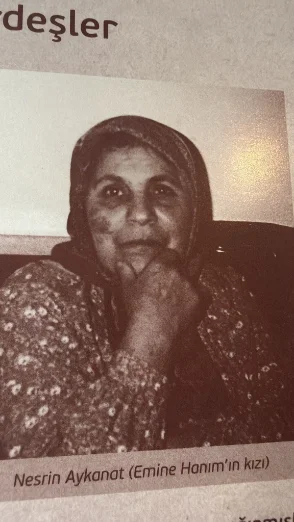
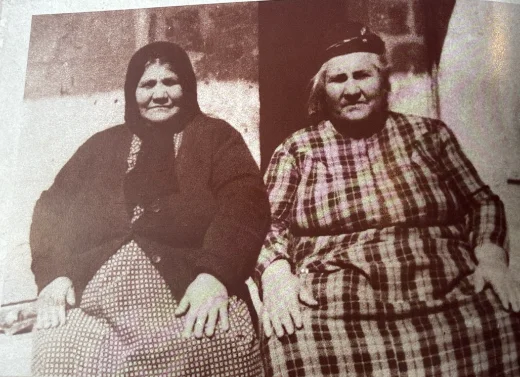
Family archive · four generations
Swipe to browse →
Chapter II · Chef & team
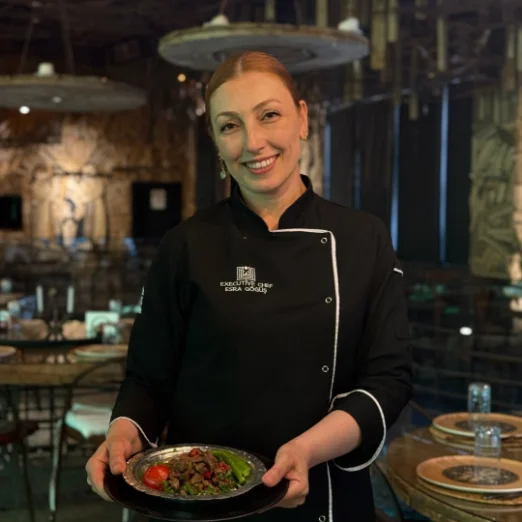
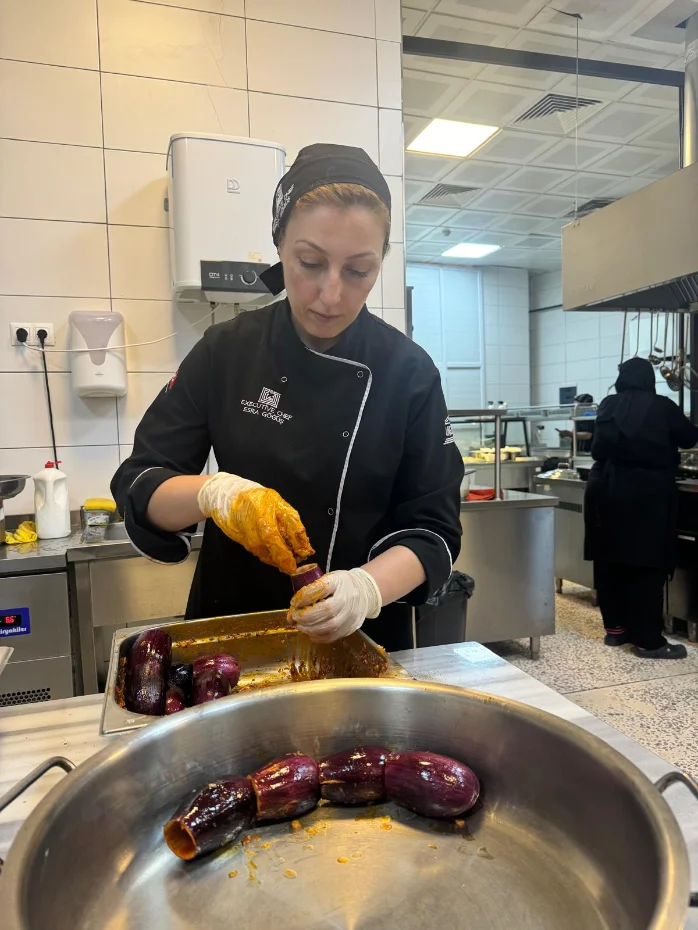
The executive chef of Göğüş Mutfağı is the woman who inherited five centuries of table knowledge — and has since won two gastronomy awards. The restaurant is women's from end to end: kitchen, floor, garden. Each season she hires young women drawn to gastronomy and teaches them at the cauldron, the way she was taught.
On the table
Chapter III · The seasonal table
The table turns with the season. Scroll and it moves to the next one — or pick a season.
Chapter IV · The balcony garden
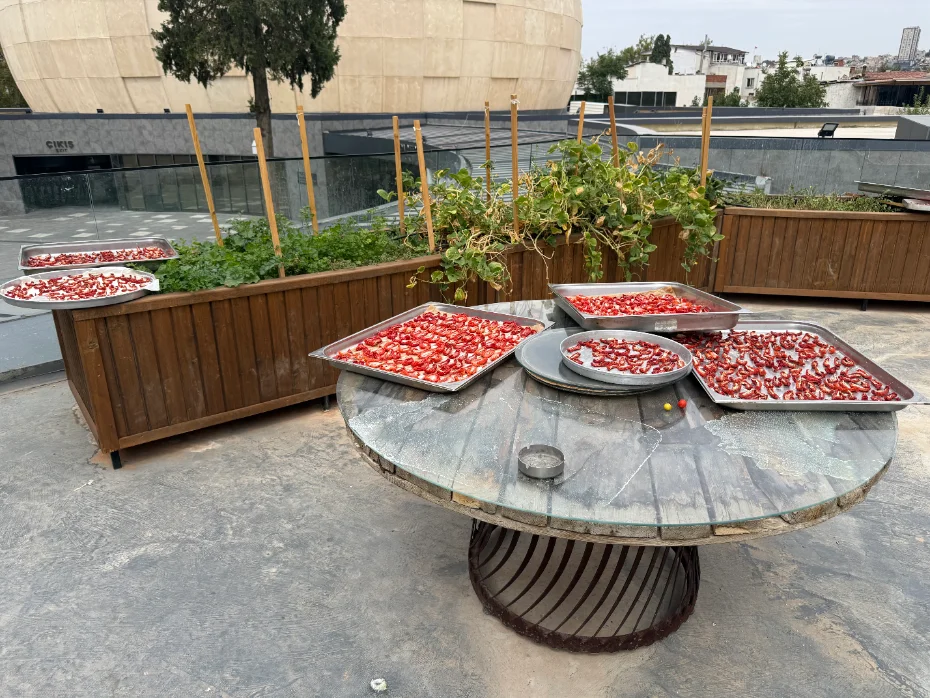
On the upper balcony there is a garden: rocket, purslane, mint, tarragon, thyme, basil. When you order a salad, the floor goes not to the kitchen but out to the garden, cuts what that salad needs and comes back down. Which is also why, when a plant is finished, the salad leaves the menu that week.
Chapter V · The house
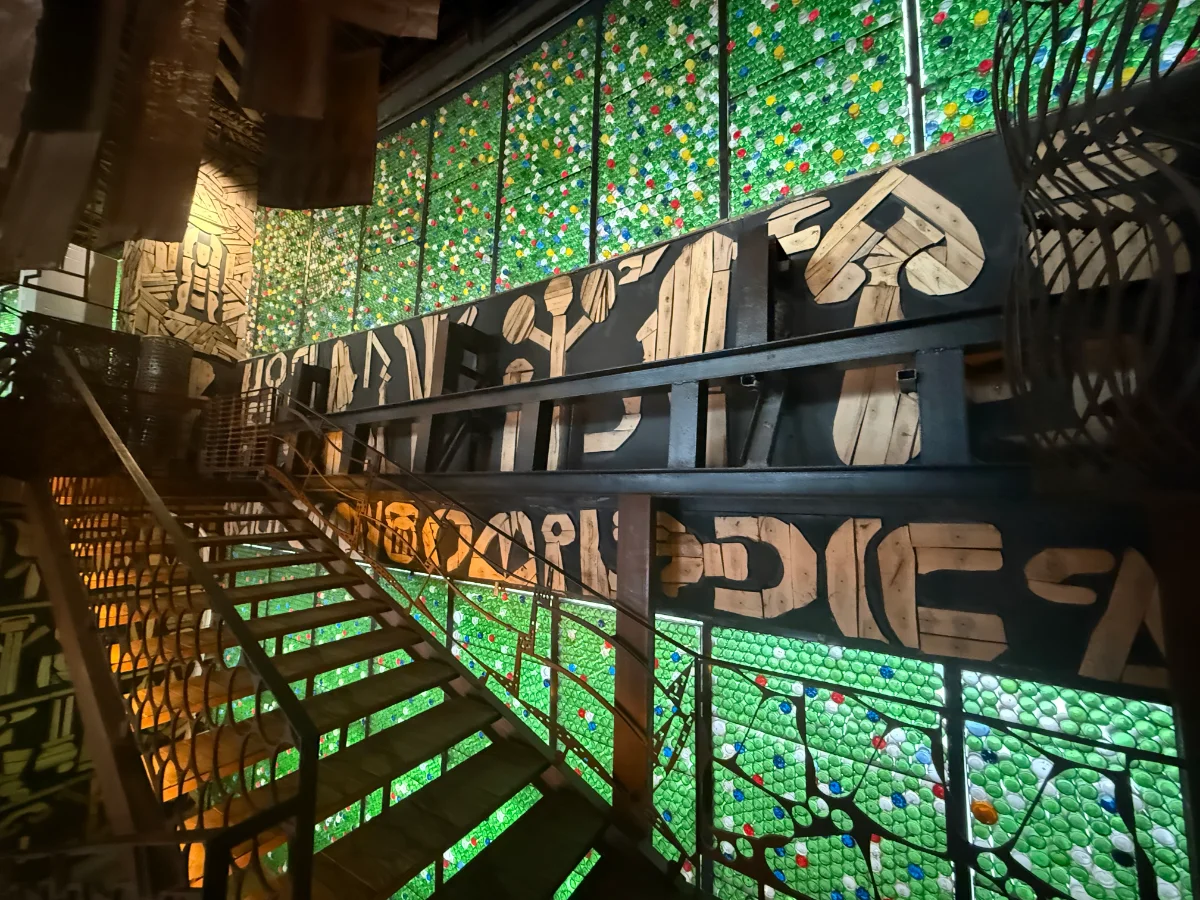
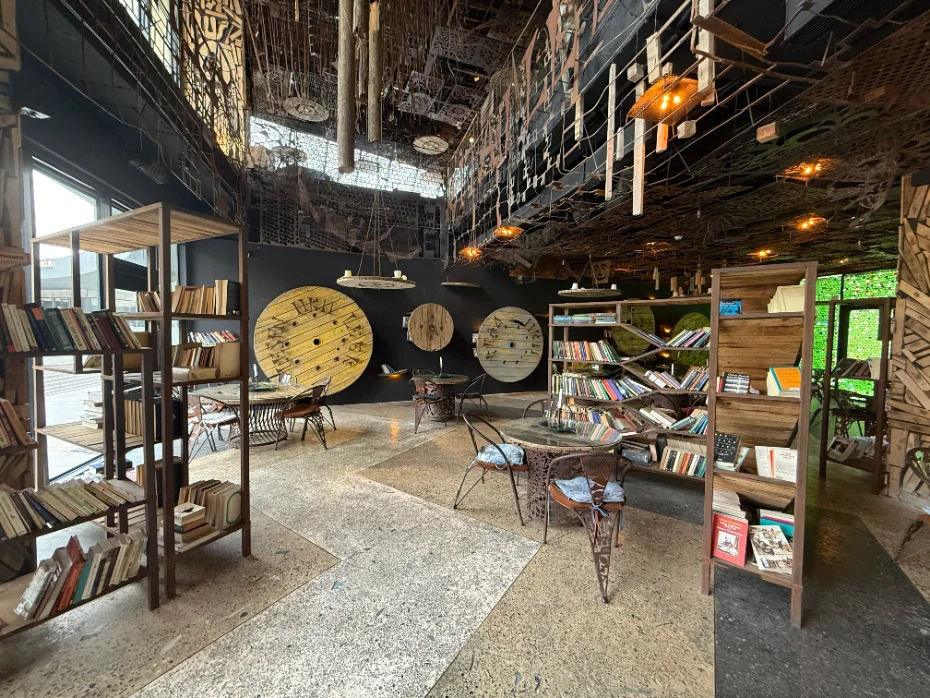
From floor to ceiling, nothing here was bought new. Factory beams, salvaged sheet metal, dismantled workshop doors and benches were put back to work; the tables are old bench tops, the lamps reclaimed fittings.
On the walls are the historic marks of Anatolia: seals from Hittite and Roman periods, symbols of abundance and water, weaving motifs. Each was placed in relation to a dish or a season.
Two floors: the ground floor is library and conversation; the upper floor is the seasonal table, the balcony garden, and soon the workshop room.
Touch the marks on the wall
The four marks on this wall come from different periods of Anatolia, and each is tied to a dish cooked here or to a season. Touch a number.
01
One of Anatolia's oldest marks: it stands for strength, heroism, masculinity, fertility and prosperity.
02
Interlocking, linked forms: they speak of family unity, marriage and enduring bonds.
03
The mark of continuity, growth, and the connection between earth and sky.
04
Hook-shaped forms: traditionally protective symbols against danger and the evil eye.
Chapter VI · Ground floor
There is a bookcase at the entrance. You can sit without waiting for a table, order something small, talk, browse. The floor doubles as a small stage: short talks, stand-up nights and seminars are being planned here.
Coming soon
The programme is being prepared. Call us to hear about it first.
Chapter VII · Business
Nearby offices already come for lunch. The three arrangements below are the same kitchen, set for work.
Corners for two with no neighbouring table and no carrying sound. Service comes only when called; privacy is the point.
2 guests · lunch & dinner
The whole upper floor for new-year dinners, anniversaries and team gatherings. One long table is laid; the menu is chosen together from that week's season.
10–40 guests · full floor
Host a visiting guest inside a five-hundred-year-old kitchen. If you wish, the chef comes to the table and explains the day's season.
4–12 guests · with the chef
Chapter VIII · Workshops
The restaurant stands directly opposite the museum entrance. In the workshop room upstairs you will cook one dish of the current season from start to finish under the executive chef — then sit down and eat it.
With the chef you look at what is good that morning; the dish is decided there.
From dough to fire, every step is yours. No measures — the chef corrects your hand.
What you cooked is laid on the upper-floor table, with that week's mezes beside it.
Length
≈ 3 hours
Places
6–10
Language
TR / EN
In preparation
The workshop room is being readied. Join the interest list and we will tell you first when the opening dates are set.
Call to join the listFor private group dates or an English-language session, mention it when you call.
Chapter IX · Reservation
We take reservations by phone only — call and we will hold your table at once. There are few tables; for weekends, call a few days ahead.
Call and hold a table nowBefore you call
Tables of 3–10 are laid on the upper floor.
One-to-ones, team tables and client hosting.
The workshop room is in preparation; join the interest list by phone.
Every day, 08.30 – 19.30